
Japanese restaurant
We will discover together the tasty dishes to savor at the Japanese restaurant!
Okonomiyaki
It is a kind of savory omelette cooked on a hot griddle. The batter is made from eggs, flour and cabbage. You can add beef, bacon, calamari, octopus, shrimp and kimchi.
Once cooked it is garnished with a sauce composed of green algae powder and dried fish flakes.
Takoyaki
Japanese Restaurant
Literally “grilled octopus”, these are balls of batter containing one or two pieces of octopus.
Ramen
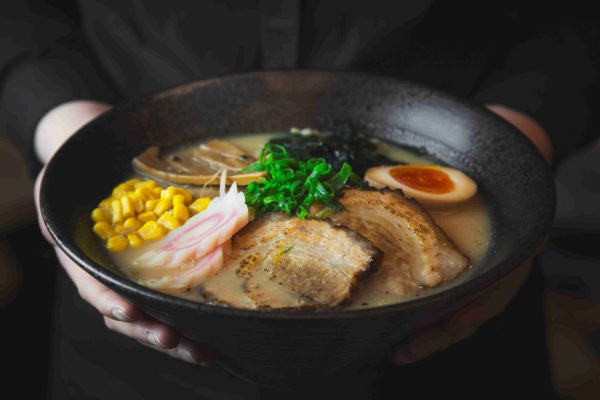
Ramen is of Chinese origin, however it is unclear when it was introduced to Japan. There is a wide variety of ramen in Japan, with both geographical and specific differences in who sells it. Ramen is known in Italy because of instant noodles. However, they have nothing to do with the bowl of steaming broth with noodles, slices of loin, boiled egg, seaweed and spring onion.
Japanese Restaurant: Tempura
It is a dish of Japanese cuisine based on vegetables and/or fish, battered separately and fried.
The name is said to derive from the Portuguese tempero (seasoning, spice), and in fact the origin of this dish dates back to the 16th century, when there were the first exchanges with the Portuguese and with the Christian missionaries.
At the beginning of each season, Christians abstained from eating meat for three days, ate only vegetables and fish and dedicated themselves to prayer. These four periods were called in Latin Quattro tempora. Hence the name tempura.
You can find the tempura alone or on top of a bowl of rice. In this case it is called tendon. A tempura dish consists of fried eggplant, pepper, mushroom, carrot, potato and prawn.
Curry rice
The basic dish is simply rice and curry. A wide range of vegetables and meats are used to prepare curry dishes. Basic vegetables are onions, carrots, potatoes; beef, pork and chicken are used for meat. Curry was introduced to Japan during the Meiji Period (1868-1912) by the British, who had colonized India at the time.
Yakisoba
In Japan there are some types of pasta: soba, made from buckwheat, udon, noodles, typical ramen noodles and somen, other noodles.
Yakisoba (buckwheat noodles) is one of the most famous traditional Japanese dishes. Yakisoba is grilled soba with cabbage, carrots and onion.
Japanese Restaurant: Zaru Soba
Cold soba is served with a special, more concentrated version of tsuyu broth called men-tsuyu. The dried noodles are first boiled and then cooled. Served later on a plate made with strips of bamboo woven into a grid, called zaru. It is a fresh dish and suitable for the summer period, but can be found all year round. They are dipped in a sauce called mentsuyu which contains nori seaweed, spring onion and wasabi.
Wagyu Meat
The Kobe beef is the bovine whose meat is a Japanese gastronomic delicacy. In reality there is not only that as fine meat in Japan.
This meat can be eaten in thin slices to be cooked with sukiyaki, as a steak to be grilled, grilled or in other ways.
Sushi and sashimi
These are the Japanese dishes that have been most successful in the West. How many people love going to all you can eat to binge on sushi?
However, real sushi, in a quality Japanese restaurant, is made up of maki, nigiri and chirashi, with infinite variations on the type of fish or vegetables. sashimi, on the other hand, is raw fish without rice.
Comments
No comments yet. Be the first to comment!
Leave a Comment