
What is molecular cuisine,
As you can well imagine, the world of catering is always looking at new strategies and continually embracing new ideas. In this context it is increasingly easier for restaurateurs and chefs to come into contact with new culinary techniques. An innovative approach that deserves to be told concerns molecular cuisine. Davide Cassi and Ferran Adrià know something about it. Based on the foundations of this approach, molecular cuisine is nothing more than a real science. All those who follow this line maintain that cooking is a real science.
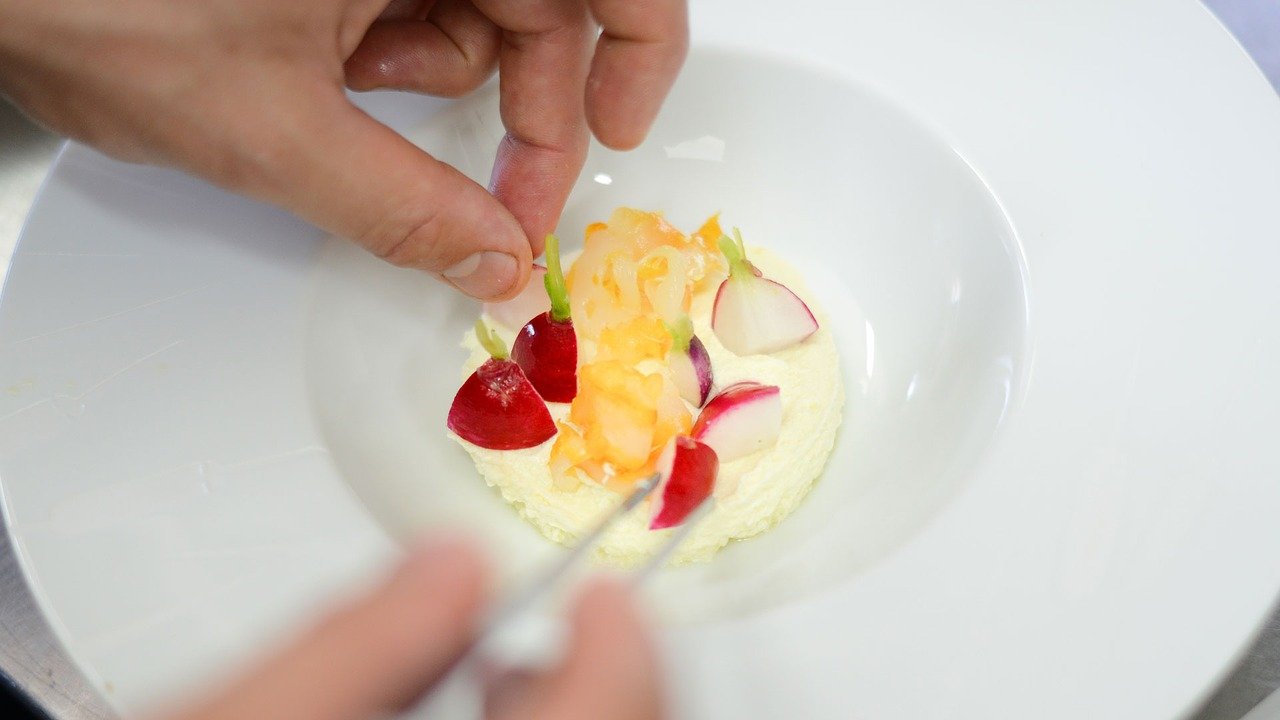
When we talk about molecular cuisine we are referring to a branch of food science that studies the processes that occur in foods during the various transformations they undergo, therefore the chemical-physical changes. The aim of chefs who engage in this technique is to offer customers a multi-sensory gastronomic experience provided by the use of sophisticated machinery that gives new shapes and textures to various dishes.
A bit of history, the basics of molecular cuisine
But when was molecular cuisine born? To answer this question we will have to go back about 40 or 50 years. We are in France between the 80s and 90s, precisely at the National Institute of Gastronomic Research. The first to propose their ideas were Hervé This and Gilles de Gennes, respectively a chef and physicist and Nobel Prize winner for physics. The underlying idea of the experiments of these figures was to make cooking a real science, based on techniques worthy of a laboratory. This approach initially amazed many, but today it represents a very particular and refined form of catering. But what are the foundations of this approach?
Fundamentals and techniques of molecular cuisine
From the 80s to today, gastronomy techniques have certainly become more detailed and careful. But basically there are some fundamentals that all chefs who experiment with these forms absolutely cannot escape. The basic idea is to bring science, and therefore chemical processes, into the kitchen. Let's forget the classic cooking techniques, flames, pans and ovens, when we talk about molecular cuisine we are dealing with a totally different type of approach.
It will seem like you are in a real laboratory, where gelling is one of the main techniques. But not only that, in addition to the latter there are techniques such as spherification or the use of liquid nitrogen to create the suspension technique. Most of the ingredients used to put into practice the various working techniques are carried out thanks to natural elements.
Many thickeners and emulsifiers actually come from algae and plants. Obviously, special ingredients cannot fail to be combined with typical machinery, capable of implementing chemical processes worthy of a chemical laboratory. Although this type of cuisine is highly sought after, today it is quite well known and appreciated, so much so that some of the simplest techniques can be put into practice without any difficulty even in a home context. Instant ice cream made with liquid nitrogen is certainly one of the simplest preparations to make.
Liquid nitrogen ice cream
The Professor Davide Cassi is the proponent of the first instant ice cream prepared using liquid nitrogen. This procedure appears to be quite simple. The ingredients to use are: fruit, sugar, water or milk depending on the type of flavor you want to recreate, and obviously liquid nitrogen. All these ingredients must simply be mixed inside a planetary mixer by pouring liquid nitrogen inside.
Put this way, it might seem like a very simple procedure, but in reality you have to pay close attention to the quantities. Obviously let's not forget that we are still talking about a science, so precision is a must. Thanks to this technique, crystals will be obtained which are 700 times smaller than those produced by classic whipping. The final effect will be soft, light and creamy.
Main exponents of molecular cuisine
- Ferran Adrià: the founder of deconstructivist cuisine in Barcelona. In many places he is considered the father of these new gastronomic techniques. The characteristic of his cuisine lies in the fact that he likes to create reinterpretations of traditional dishes by playing with temperatures and consistencies.
- Heston Blumenthal: another important exponent of molecular cuisine. For him, gastronomy is a real science. He enjoys giving shape to new consistencies and structures using liquid nitrogen, his main ally. The beginning of his career can be traced back to the first moment in which he began reading the books of Harold McGee, an American chemist, whose ideas led him to develop an idea of super cutting-edge cuisine. His most famous restaurant is The Fat Duck in Bray, here you can taste one of his best-known dishes: Triple Cooked Chips, chips with a very hard shell but soft inside.
- Ettore Bocchia: We cannot fail to mention an Italian promise of avant-garde cuisine. Ettore Bocchia, who was among the first to bring these new culinary techniques to Italy. Always in close contact with the scholar Davide Bassi, Ettore Bocchia created the first Italian molecular cuisine menu; the frying of melted sugars, the use of unlikely ingredients in classic Italian preparations and the creation of impromptu ice cream.
It's not just about cooking, these chefs offer real masterpieces in their restaurants. These are true works of art capable of surprising and exciting. We are far from traditional cuisine. Real experiments to test the taste buds and senses of all those who want to experiment with new techniques and live unique experiences.
You might also be interested in: The chef designer Fabrizia Ventura between cooking and art
Comments
No comments yet. Be the first to comment!
Leave a Comment