
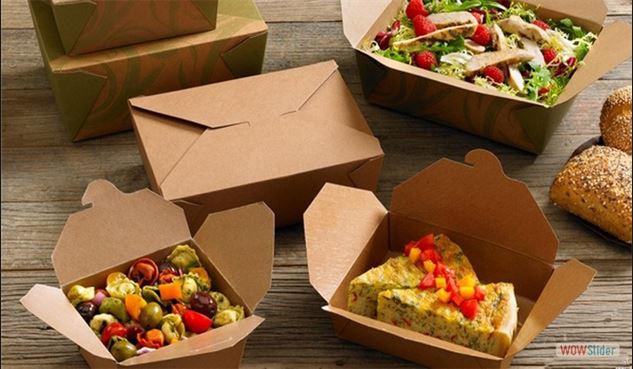
Theconsideration towards the environment becomes law. The restaurateur must adapt his warehouse stocks to take-away containers made of alternative materials to plastic and biodegradable
How to orient yourself?
Alternative materials to plastic
The study of alternative and innovative materials to plastic has led to the discovery of valid substitute materials for plastic.
With the discovery of new materials, alternatives to plastic have been invented. These alternative and innovative substitutes will also help the environment by being eco-friendly
In recent years there has been an increase in the study of various types or compounds to be used in place of this material which causes pollution if not handled correctly. One of these substitutes is polyurethane which can take any desired shape unlike other plastics because it is flexible yet strong!
Once identified as alternatives it is necessary to introduce them into your management software.
Alternative materials to plastic
For the transport of cold foods, IngeoTM (P.L.A.) containers are available, for hot drinks the P.L.A. is used. Crystallized in lids , plates and containers with lids and for some types of glasses the cellulose pulp.
Alternative materials to plastic: Let's see the technical characteristics
Alternative materials to plastic
TheIngeoTM (P.L.A.) is a family of biopolymers derived from corn starch, completely biodegradable and compostable according to the EN13432 standard. The amorphous polymer resists a maximum temperature of 45°C and is perfectly transparent.
Ingeo™ is mostly used in thermoforming, to produce glasses and trays with aesthetic and mechanical characteristics similar to polystyrene but, given its poor resistance to high temperatures, suitable only for cold drinks and foods.
Transparent, with hermetic seal and in the three sizes small, medium and large, they resist up to a maximum temperature of 45°.
For the production of cup lids for hot drinks theP.L.A. is used. Crystallized.
Crystallization is a process that makes P.L.A. (originally amorphous) capable of withstanding higher temperatures, up to 85°C. Exactly like the PLA biopolymer from which it derives, it is biodegradable and compostable according to the EN13432 standard. Once crystallized, CPLA loses its original transparency and becomes milky white in color.
For hot foods there are containers with hinged lids in cellulose pulp, both in single-compartment versions and in versions with two and three compartments.
The Cellulose Pulp is obtained from processing waste of fast-growing plants, in particular sugar cane, bamboo or straw, and is therefore entirely made up of natural materials, as well as being completely biodegradable and compostable according to the EN13432 standard. The pulp is white in color and resists up to a maximum temperature of 100°C.
Suitable for microwave and traditional ovens. It is mainly used for the production of plates and containers with lids but is also used for some types of glasses.
They are made of cardboard coming from responsibly managed forests, covered with a Mater-Bi film which ensures they are resistant to liquids - hot and cold - and are suitable for contact with food.
Alternative materials to plastic: What is Mater.Bi?
MATER-BI is a family of completely biodegradable and compostable bioplastics with which solutions and products with reduced environmental impact are created for everyday life.
Cardboard + Mater-Bi®: this is a cardboard made with fibers coming from responsibly managed forests. The internal side, in contact with food, has a Mater-Bi® coating which guarantees resistance to liquids and suitability for contact with food up to a maximum temperature of 70°C.
The Cardstock: is made with fibers from responsibly managed forests.If it is also BioCoated, it means that it has undergone a mechanical surface treatment that makes it more resistant to temperature, liquids and fats.
Comments
No comments yet. Be the first to comment!
Leave a Comment