
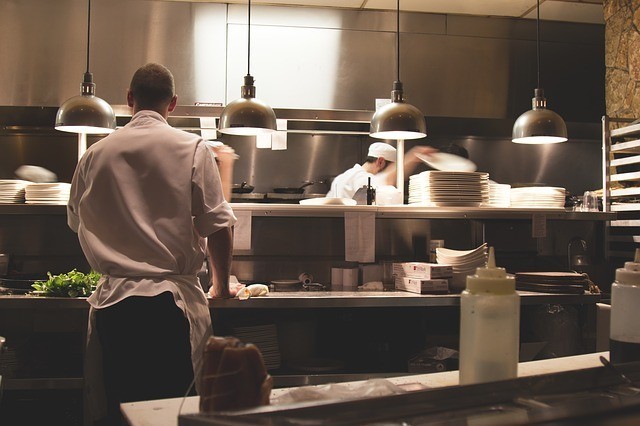
Restaurant kitchen sizing. A restaurant kitchen must be well sized to ensure efficiency, safety and hygiene. In addition to the square footage, it is important to take into consideration the height of the room. In fact, the work area must guarantee adequate ventilation and lighting, as well as be easily cleanable and sanitisable. Furthermore, it is necessary that the safety and hygiene standards required by food regulations are respected.
The sizing of kitchens depends on the size of the restaurant and the type of cuisine you intend to offer. For example, a restaurant that offers a limited menu requires a smaller kitchen than a restaurant that offers a large selection of dishes. In general, the kitchen should be at least one third of the total area of the restaurant.
Restaurant kitchen sizing
Furthermore, it is important to take into consideration the arrangement of the elements inside the kitchen. The various spaces must be organized in a functional way, to ensure an efficient workflow. In particular, it is necessary to provide an area dedicated to food preparation, a cooking area, a washing area and a storage area.
Finally, it is important to consider the kitchen equipment. The appliances and tools used must be suited to the needs of the restaurant and the quantities of food being prepared. It is important to invest in quality equipment to ensure the durability and efficiency of the tools.
Restaurant kitchen sizing: safety standards
Restaurant kitchen sizing
Let's talk about kitchen sizing. Let's therefore start from the actual dimensions, which must comply with certain safety standards, both for workers and for correct conservation of the materials contained therein. The restaurant kitchen must have a minimum surface area of 15 m2.
Restaurant kitchen sizing
If the dimensions are smaller, it will be necessary to evaluate on a case-by-case basis, analyzing the structural, plant engineering and organisational-management requirements and respecting the health and hygiene standards. In fact, compliance with this regulation is essential for opening a restaurant.
Restaurant kitchen sizing
All kitchens must comply with certain standards below which it is practically unthinkable to talk about the possible opening of a business. For example, toilets must fully fall within a specific provision of the local health authority. In short, everything must be taken care of down to the smallest detail.
Restaurant floor plans
The dimensions of a restaurant kitchen also deserve due attention. We are talking about public places where, to carry out all the required tasks, it is necessary to be able to move in total freedom and safety. This is why before proceeding with setting up a restaurant kitchen it is essential to carefully study the restaurant floor plans. Each element must be positioned according to a very precise rigor. A correct plan of such an environment will ensure that everything is managed in the best possible way, even during the activity phase.
It is important to remember that a kitchen that is too small could also complicate the internal management of the spaces, between the arrival of the waiters with the restaurant orders and the movement of cooks and chefs to the kitchen.
Sizing kitchens
A factor that instead influences the internal division of spaces is the quantity of meals that the kitchen must prepare on average. In general, for the preparation of more than 100 meals, the kitchen must be divided into sectors.
Restaurant kitchen sizing
Among these it is important that there is at least one intended for meat processing, and another reserved for vegetables. Naturally, depending on the size of the kitchen, the sectors may be separated by panels or even divided into distinct areas.
Restaurant kitchen sizing
If instead we take into consideration the actual structural requirements, we must consider that they will be the same as any other workplace.Not only that, equipment and furnishings must be positioned in a functional manner, so as to best allow for the cleaning and hygiene of the premises. The floor must also be up to standard, it must allow
Returning to the actual dimensions of the kitchen, it must be said that the sizing will have to vary and increase based on the quantity of seats and covers inside the restaurant.
Consequently, for a restaurant that seats up to 30 people, the minimum recommended size is 15 m2. If, however, the range of seats goes from 30 to 100, then the kitchen must reach 30 m2.
Restaurant kitchen sizing To create a kitchen that is efficient, hygienic and safe, it is not only enough to know the size of the room, but also the height of the ceiling. The minimum standard height for the kitchen must be 3 meters, as well as for the room reserved for customers. However, there may be some exceptions in case of particular structural or urban planning situations, but in this case a waiver signed by the Mayor is required. Ceiling height in the kitchen is important for several reasons. Firstly, if the ceiling is too low, air ventilation may be compromised, increasing the risk of food contamination. Furthermore, limited space could make it difficult to move personnel and arrange appliances and equipment. To ensure good air circulation in the kitchen, it is important to install an adequate ventilation system. An efficient ventilation system can help remove moisture and vapors generated during cooking and food preparation, thus maintaining a clean and healthy environment. Furthermore, it is important to keep the kitchen clean and tidy, so as to minimize the risk of contamination. Restaurant kitchen sizing In addition to the ceiling height and ventilation system, there are other factors to consider to organize an efficient kitchen. For example, it is important to choose quality equipment and furnishings that can resist wear and tear and last a long time. Furthermore, it is essential to define workflows in the kitchen, in order to optimize preparation and service times. Finally, it is important to take into account the safety of staff and customers. This means making sure all equipment is in good condition, products are stored correctly and staff have access to safety equipment such as fire extinguishers and first aid kits. With good organization, a kitchen can become the beating heart of a successful restaurant. Here are some other restaurant kitchen requirements that absolutely cannot be underestimated. The calculation of the lighting surface is an equally important aspect of the sizing of a restaurant kitchen. A well-lit and ventilated kitchen helps create a comfortable working environment for chefs and staff, while also improving food safety and hygiene. To calculate the proportion between the room surface and the lighting/ventilation surface, several factors must be taken into consideration, including access to natural light and external ventilation. It is important that the kitchen is equipped with windows and doors that allow adequate ventilation and lighting. Windows should be openable and equipped with anti-insect and anti-rodent nets to ensure good air circulation without risk to the health and safety of personnel. Furthermore, it is necessary to respect some standard proportions between the room surface and the lighting and ventilation surface. In particular, the ratio between the room surface and the ventilation surface should be approximately 1 to 20, while that between the room surface and the lighting surface should be approximately 1 to 10.These proportions ensure that the kitchen is adequately ventilated and lit to ensure food safety and hygiene. To achieve good lighting in the kitchen, you can use a combination of natural light and artificial light. LED lamps are a popular choice as they offer good brightness and greater energy efficiency than traditional lamps. It is important to install lights to avoid shadows, especially in those areas of the kitchen where preparation and cooking activities take place. Sizing kitchens Finally, to ensure the safety of staff, it is important to pay attention to the maintenance of kitchen openings. Anti-insect and anti-rodent nets should be regularly cleaned and replaced if necessary to avoid the accumulation of dirt and bacteria. If there is damage to windows or doors, they should be repaired or replaced promptly to ensure that the kitchen remains adequately ventilated and lighted. Restaurant kitchen sizing In any case, so that every aspect of the design and management of spaces receives the right attention, the advice is to rely on a food and beverage manager. This is a figure who deals with the management of the restaurant at 360°. A versatile figure who must be able to range from knowledge of the necessary requirements and structural aspects, to that of raw materials, to cost calculation, to personnel selection. In short, a real restaurant manager, who by supervising every aspect, will be able to improve management and consequently also the customer experience. The food and beverage manager is not necessarily the owner of the restaurant, who may not have all the necessary skills and competences. Rather, he is an external figure who offers his advice and experience to optimize every aspect and help the restaurant achieve its business objectives. Try our restaurant management software for free now. It will be of great help when organizing your work. Download NowRestaurant kitchen sizing: average height and lighting
Restaurant kitchen requirements
Restaurant kitchen sizing: lighting
Comments
No comments yet. Be the first to comment!
Leave a Comment