
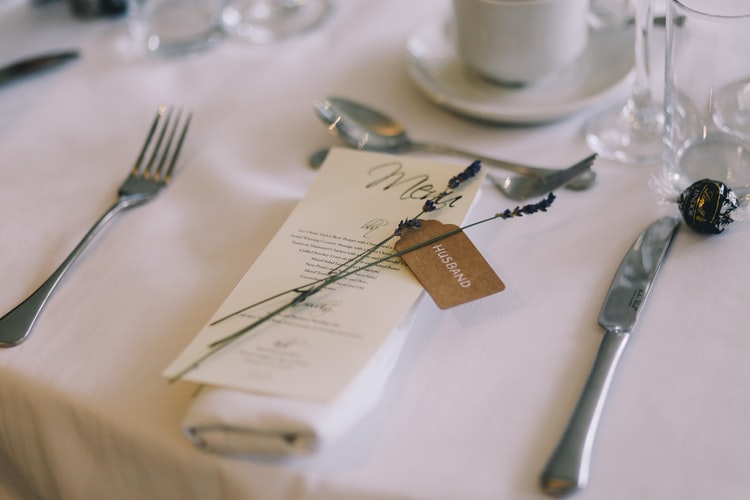
Restaurant menu: how do you write and present a winning menu? Whatever your business in the catering sector, you need to draw up a menu. However, not all menus are the same, and with good reason; in fact, based on the type of offer, the menu also changes.
Restaurant menu
In this article we will focus mainly on how to write and present a restaurant menu, but we will also try to collect more general advice on how to set up your own ideal menu.
The world of catering is large and varied in its offerings; we can include a bar, a pizzeria, a restaurant, even a food truck, and each has its own particularities that make it recognizable in the eyes of customers both in terms of brand and offer.
Therefore, if you are the owner of a starred restaurant, you will certainly need a different menu from what is expected from a brasserie. We see then that the password will not only be how to write a menu, but how to write a menu based on your needs!
If you want to know some useful advice, you should continue reading the article!
Restaurant menu: tips & tricks
We had already mentioned the topic on our blog; we were talking about general advice on how to create a perfect menu, and it is precisely from here that we want to start and then talk about how to write a more personalized menu.
1 Internal analysis
Restaurant menu
The first thing you need to pay attention to before writing a menu is to do an internal analysis. What type of service do you offer? Are you a farmhouse or a chalet in the mountains? A pizzeria in the city or a chiringuito on the beach?
Maybe it seems obvious to you, but instead it is a very important phase as it clarifies the type of customers you are exposing yourself to and their consumption habits. And this says a lot about the expectations they may have of you.
2 Even the menu is part of an ecosystem
Your business is a Brand, and if the final goal is to expand the turnover, know that there are various strategies to implement to achieve it. One of these is to keep in mind the concept of ecosystem.
Each element, starting from the communication channels with which you interact with your customers to the single piece of cutlery on the table must speak about you. The ability to tell yourself, create a storytelling around your Brand is extremely important in modern commercial activities.
Always remember that you are not just selling a tasty dish of pasta, but offering a memorable experience to the customer that they will surely want to repeat. The menu is an integral part of this discussion, and for this reason, aware of who you are and what you offer, you must translate the concept into your menu.
3 Graphics and materials
At this point we delve more into the technical side, but one way to tell your story, distinguishing yourself from the competition, is to present an unconventional menu. If in line with your Brand, why not try?
Have fun creating a more unique and designer cover, but pay attention to giving more visibility to the logo and cut out a space on the first page to write about the history of your restaurant, accompanied by the most significant photos.
The choice of material must also be strategic: a handwritten menu is a completely different thing from the laminated menu which, at the risk of breaking your heart, no one loves.
A bit of strategy is also useful for consistency: if you have a vegan restaurant, it certainly won't be the case to have a menu with a leather cover, do you think?
4 Less is more
Restaurant menu
To the question: "how to present a winning menu?" the right answer is: brevity, or to put it in the language markettara, less is more. Nobody wants to read very long menus, whether it's restaurant cuisine or pizzas; we always end up with the same old margherita.
This is a somewhat delicate point, because it doesn't just concern the presentation of the menu but affects your business more generally. It must be said, however, that a menu made up of a few dishes has a different impact in the eyes of the customer and for different reasons: let's analyze them together.
- The customer gets lost reading the menu:
Of course, there are always undecided people, even if it's a matter of choosing between two solutions, but reducing the number of courses can help.
- Few dishes are synonymous with quality:
Restaurant menu
Managing a kitchen with a limited choice of dishes can communicate quality to the customer, as you are conveying to him that you specialize in something and that the ingredients used are genuine.
The idea that fits into your customer's mind is of a cuisine of a certain level.
Marketing pills --> Play on the presentation
Rather than putting infinite courses on the menu, put fewer but play on their presentation. Remember that consumers today are very demanding, and taste is also perceived through sight. Reimagining traditional dishes may be good, but a visual revisiting is even better!
5 Where to enter the price?
Most menus have two columns: one on the left for the dishes, complete with description (schematic or narrative), and on the right the respective price. The idea of sorting them from lowest to highest price is good, but not this division into columns!
Restaurant menu
The risk is to direct the customer to order dishes based on price; a menu should instead have a different purpose, that is to recommend the choice of a dish also based on different factors, such as taste or quality of the dish.
If we are not talking about an extremely significant price difference, it is assumed that if a customer is sitting in your restaurant and is consulting the menu, it means that he wants to try your cuisine; from a business perspective, are you sure you want to suggest only the cheapest flat plate?
To retain him, you have to give him the best of you, because a customer is always willing to pay a little more if he gets a quality service.
All this is explained in the menu by eliminating the column on the right and inserting the prices directly at the end of the description of the dish.
Conclusions
These were our tricks for presenting a winning menu. Do you know any others? Write them in the comments!
Comments
No comments yet. Be the first to comment!
Leave a Comment