
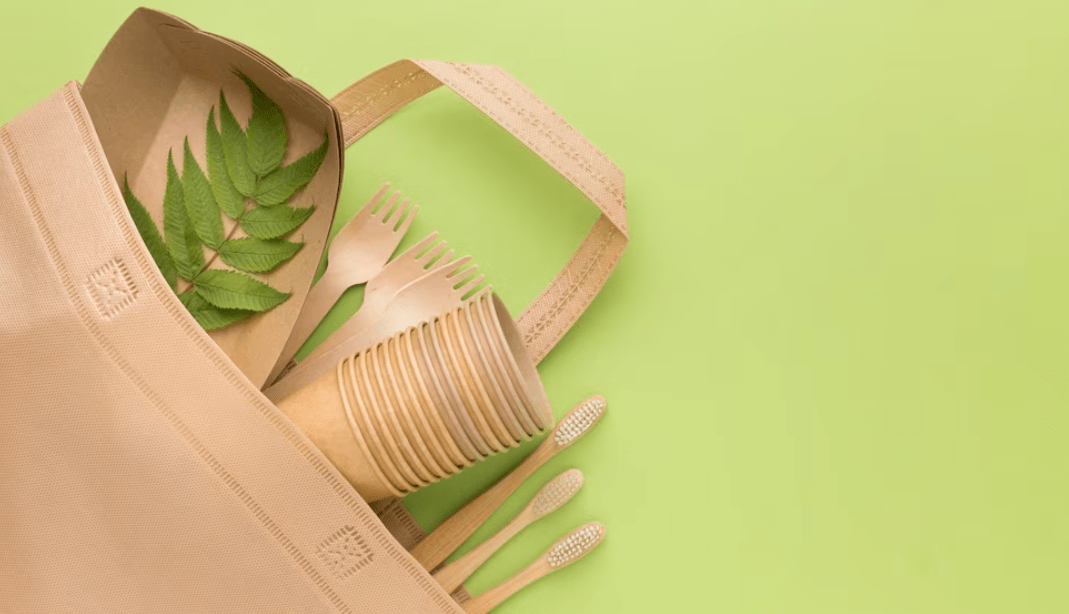
Sustainable packaging. The ever-increasing number of takeaway food purchases has made possible an increase in the consumption of plastic for packaging. Obviously this situation tends to produce a negative effect on the environment. For this reason, the need to opt for sustainable packaging is increasingly felt. The European Union has spoken clearly on the matter, by 2030 all packaging must be recyclable. For this to be possible, plastic must be replaced by alternative materials.
Sustainable packaging
We are talking about seaweed, mixtures produced with wood fibers or clay polymers or oat husks, but not only. It is also possible to opt for certified paper as packaging material. In fact, it seems that paper bags respond well to environmental impact, so opting for this solution could be welcome. Obviously not all paper is sustainable, just check that it has the PEFC mark. This means that the forests and plantations from which the paper is derived must be managed according to very strict environmental protection parameters.
But what materials are suitable for sustainable packaging?
Sustainable packaging
Given the substantial increase in consumer interest in other planetary solutions, all companies operating in the industry now carry the "sustainable" label. The most common practices in this direction range from supporting regenerative agriculture or reducing the use of proteins of animal origin, and more generally of carbon.
Sustainable packaging
It appears that sustainable packaging will take an increasingly important role in the coming years, as consumer preferences shift towards truly all-round sustainable products.
Here are the 5 most interesting examples that can inspire food industry experts consumers aiming for lasting changes
Mycelium
Sustainable packaging
The mycelium is an innovative material very similar to that obtained through a cutting-edge bioengineering process which involves the application of filamentous branches of fungal origin and binders as a type of agricultural waste.
This process allows the material to reach the growth stage in less than a week, transforming the waste and at the same time absorbing carbon dioxide from the atmosphere, thus resulting in a neutral or even negative carbon footprint.
Sustainable packaging
All these advantages are combined with a cost equivalent to that of the more common polystyrene, offering a biodegradable, easy to mould into any shape, fast to light, but also hydrophobic and fireproof.
The only drawback of this product is its durability, since its decomposition period is about months. Obviously this is a problem for companies that operate over long distances, but it could on the contrary represent a further reflection on the need for an evolution towards shortening supply chains.
Poly-B-Hydroxybutyrate (PHB)
Sustainable packaging
Although it has been present in nature for a long time, it is only recently that some companies have started research into how to develop bioplastic materials, and the first positives from this research are starting to move towards the market, applied to a wide range of industries ranging from textiles to furnishings.
Regarding the food sector, the most important example is represented by AirCarbon, which with its innovative patented technology provides resistant, biodegradable and circular packaging solutions: at the end of its use, in effect, this material occurs in such a way as to allow the replication of its own production, leading to a cycle that could potentially be perpetual if managed by the right technology.is processed by the right technology.
The consistent adoption of this type of PHB in the sector could therefore have an impact on the reduction of environmental pollution and microplastics in our oceans. This will start a mitigation process with all the resulting consequences in terms of the health of the planet and people.
Cellulose pulp
Sustainable packaging
It is a material very similar to hardback. However, unlike the latter, it is created through the recycling and subsequent processing of various fibrous materials such as paper, sugar cane, or wheat or bamboo fibres. Maceration does not involve the use of products and takes place in the absence of wastewater, as the water used is evaporated or reused several times. Then unlike cardboard, cellulose pulp molds into any shape required and requires no assembly, which makes the process simpler and faster and leads to a stronger final product.
Although it is not a particularly recent solution, the technology related to its production has significantly improved in recent years, resulting in a more sophisticated appearance and thus making it an appropriate solution for the most demanding companies aiming for a quality experience for their consumer that surpasses sustainable innovation.
Sustainable algae-based packaging
Several varieties of seaweed have gained importance in recent years as a valuable source of and as a possible solution to making our food system sustainable and accessible.
Through the use of cutting-edge technology, algae are processed to obtain a transparent film that can be used as an airtight container for liquids or to wrap any type of food.
In this regard, an interesting example in this sense can be found in the solutions proposed by the British startup Notpla, which provides the consumer not only with access to sustainable packaging suitable for all their favorite products, but also with an excellent source of nutrition that can be consumed after having finished the food or drink it contains.
Corn starch based packaging
Corn starch-based packaging is one of the most popular sustainable options for food transportation preservation, and chances are you've encountered it at least once times if you're a regular takeaway consumer. This biodegradable material is obtained from the sugars contained in corn starch and the subsequent innovation of the resulting polylactic acid, and can be to create particularly resistant trays, cutlery, glasses or shopping bags. If recycled correctly, corn starch bioplastic decomposes in six months, but those times can be exponentially when the supply of light and oxygen is not sufficient, it is therefore important that consumers are properly informed of the practices to follow.
Furthermore, in addition to being biodegradable, this material has a much lower impact than traditional plastic at the production process level, offering companies an excellent and at the same time profitable alternative.
You might also be interested in: Food packaging as a communication channel?
Read also this article
Comments
No comments yet. Be the first to comment!
Leave a Comment