
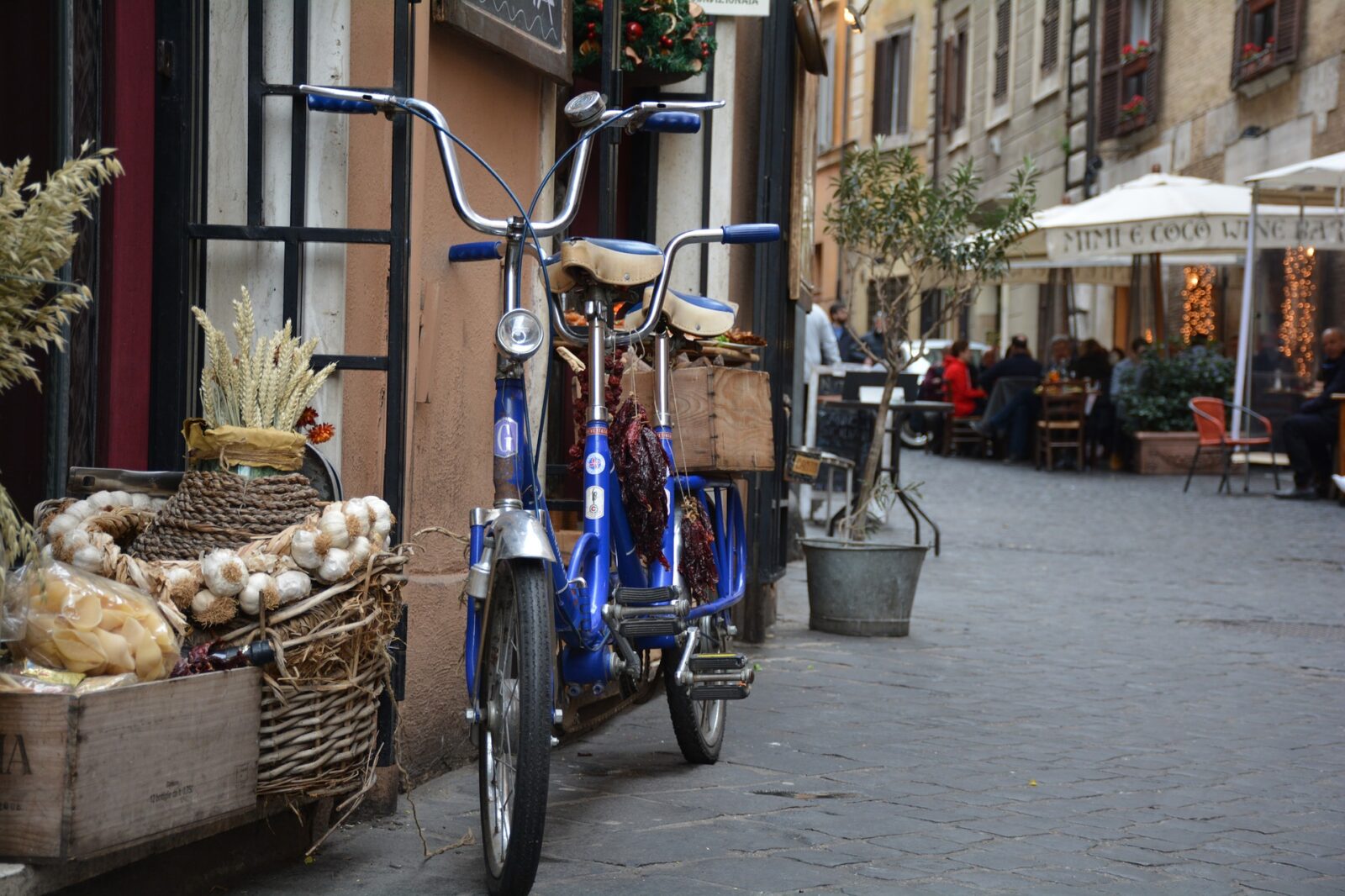
The taverns of Rome. “Roma doesn't act stupid tonight, give me a hand and say yes”. So says a famous song by Lando Fiorini, invoking Rome, the eternal city, one of the most fascinating places in the world, where culture, art and history have been intertwined for millennia; Rome, a treasure chest of priceless beauties.
With its three thousand years of history, it is rich in monuments of antiquity, emperors, kings and popes have left their mark, a trip to Rome is certainly one of the things that every man should do before dying.
The capital of Italy is a large cosmopolitan city with a history that has influenced the entire world; founded according to tradition on 21 April 753 BC. it was the first metropolis of the West, the beating heart of one of the most important ancient civilizations, as well as the place of origin of the Latin language; in short, Rome is full of magic and it is no coincidence that it is called the Eternal City and Caput Mundi.
Rome is the Italian city that has the greatest number of visitors year after year, because its charm and magic are unparalleled, because it is the cradle of a great civilization whose remains we can still admire today and for its monumental testimonies unchanged over time, which the whole world envies us.
Roman culinary tradition: the taverns of Rome
But what is, apart from its eternal beauty and its infinite history, another of the most important characteristics that Rome reserves for its most passionate visitors? The kitchen, of course.
After all, this is also a form of art. Culinary art concerns the preparation of food and is characterized as an interdisciplinary science that involves many areas. We talk about biology, agronomy, history, anthropology, philosophy. In gastronomy, the technical aspect and the knowledge of handling food well merge indispensably with those historical and cultural elements that intervene in the preparation of food and in their traditions and innovations.
Some traditional dishes
Cacio e pepe, saltimbocca and tripe, as soon as we pronounce these simple words, our thoughts immediately take us back to the eternal city and its ancient culinary traditions. On the other hand, what we all know as typical Roman cuisine is nothing more than a set of simple and almost poor recipes. Often these are recipes made with recycled ingredients, and which are created above all by the people for the people.
Yet as previously mentioned, Rome was, and still is today, one of the best-known cities in the world. Crossroads of different peoples and cultures that have intertwined with ours, inside and outside the kitchen. Each dish therefore is also the result of millennia of history that have brought dishes with intense and genuine flavors to the table. These are real delicacies that we can still find and savor in the city's historic taverns and taverns. Cuisine has always been a fundamental element of the great Roman Empire: saying that they were born at the same time might almost seem exaggerated, yet it is truly realistic.
The taverns
The taverns - Cauponae in Latin - have always been an important place in the socioeconomic life of the city, obviously followed by the culinary tradition. The “De Re Coquinarie” dates back to the times of Tiberius (14/37 AD). The first real collection of Roman cuisine recipes. Written by Marco Gavio Apicio, a well-known chef of the time. There is therefore significant historical evidence that demonstrates a culinary tradition built in the latter and which is still kept alive today in the taverns and taverns of the capital.
Roman taverns: simple and delicious dishes
The dishes offered are simple and delicious. Just as they once were, and prepared with what the Agro Romano offered: herbs, greens, but also goats, sheep and pigs. These ingredients remained practically the basis of Roman cuisine.
It is necessary to mention some significant changes that took place between the end of the fifteenth century and the beginning of the sixteenth century. At this time, the capital's Jewish community began to expand. Following the expulsion of the Jews from Spain (1492), this large community lived for many centuries mixing its own culinary tradition with that of the city that had welcomed it.
Just to mention one, this is how the famous recipe for Judas artichokes was born. This was once prepared by Jewish housewives. In particular on the occasion of Kippur (Jewish religious holiday). The Judas-style artichoke is still today one of the most famous and popular dishes in Roman taverns or taverns. Likewise, so are the oxtail, the Roman tripe and the golden fried sweetbreads, practically dishes made up of offal and scraps.
The taverns of Rome: a bit of history
After the establishment of the Testaccio slaughterhouse (December 1891), the use of the so-called "fifth quarto" spread in the Roman culinary tradition. This is what remains of the bovine once the noblest parts have been cut. Furthermore, the slaughterhouse workers were often repaid with low-quality butcher's products (liver and tongue for example) which they in turn resold to taverns, thus officially starting the creation of dishes made up of all the slaughterhouse waste.
In short, strong aromas and great historical dishes can still be savored today in the city's taverns and taverns, which have always been committed to preserving the most ancient traditions of good cuisine, thus also preserving the flavors of the past, kept alive precisely thanks to passion.
This is Rome, Caput Mundi. Rome with its lights, its remains and its inevitable traditional scents.
Comments
No comments yet. Be the first to comment!
Leave a Comment