
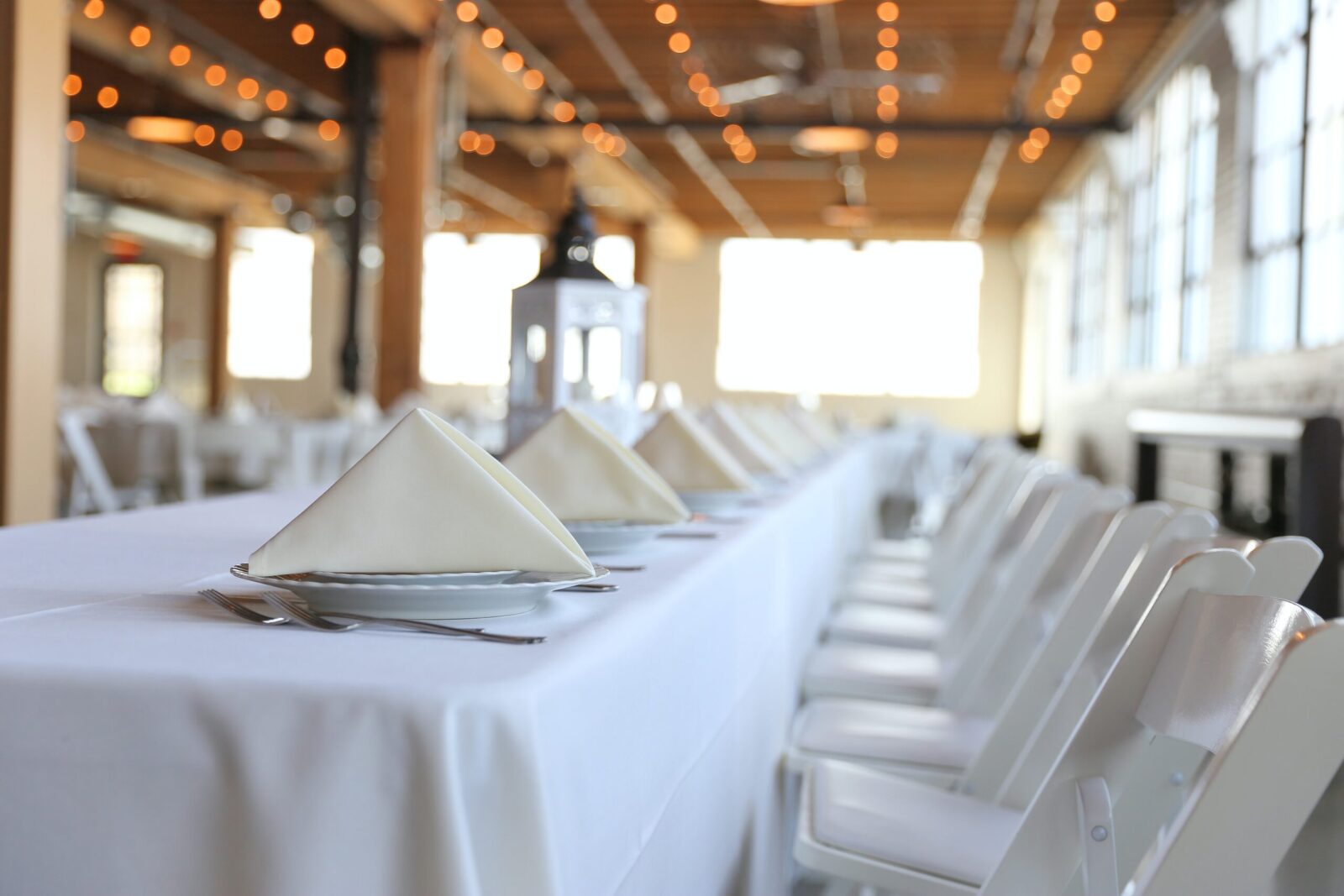
Serving at the table with professionalism can make the difference for your restaurant; not only the most demanding ones, but all your customers expect impeccable service, and it is also on the basis of this parameter that will decide whether or not to return to you.
The bon ton at the table is always a welcome choice, but it doesn't just concern the diners; concerns the entire management of the table and all the courses that follow. You will indispensably need adequate and specialized personnel, and above all coordinated with the kitchen department.
Serve at the table professionally
Serving at the table
Remember that even the smallest mistake will be noticed, especially by a new customer, and if you want to maintain a certain standard, you will need to ensure an offer that lives up to expectations. It's about working on the customer's perception, to convey the message that your restaurant is really the best.
Serving at the table in a refined way is certainly a good starting point. That's why we've collected some useful tips on how to serve at the table successfully!
Serving at the table: the rules
Serving at the table
# Rule 1: Coordination
We'll tell you a secret: table service is only the last part of a much more complex assembly line that concerns the entire management of your restaurant. The very first thing you will need to be absolutely sure of is that the dining room staff is coordinated with the kitchen department. This step will save you from a series of rather common but very annoying errors, which the customer will notice and use as a reference parameter to decide whether or not to return to your establishment.
How to coordinate all staff?
Missed orders, dishes coming out out of sync, thus serving one diner first and then the other after some time, customers waiting too long both to order and to be served... If this all sounds very familiar to you, it means you have a problem; luckily, we are here to come to your rescue.
Listen carefully to feedback from customers as well as your staff; regardless of what you think about the direction your place is taking, what really matters is the perception of your customers, because it is the only way to understand if your strategy is working or there is something wrong andthen we find the problem to fix it.
Make sure you can effectively handle a certain number of customers; let's say, for example, the case that your restaurant is calibrated to accommodate 100 people. The entire management sector will be regularized by 100. Perfect, continue in this way without overdoing it, in the sense that in a restaurant the home principle "where one eats, 3 eat" does not apply.
Serving at the table
Rather, works on the quality of the service offered for these 100 people, in order to build their loyalty over time, even at the cost of giving up an extra customer for an evening. If you experience a significant increase in demand, then do not improvise, but organize yourself to expand the offer by 150, 200, 250 or more places.
This premise is functional to the discussion on coordination as you will have the ease of serving all customers with the same pace and the same professionalism, without the kitchen and the dining room struggling to keep up with too many things at once. They must be able to work in harmony, so as to get the dishes out on time and at the same time. Put yourself in your customer's shoes, and think of yourself sitting at the table with other people; would you prefer to be served all together or one at a time?
The general embarrassment of "come on, it's cold, now it's coming to me too", and the classic response "don't worry, I'll wait because it seems rude to me" are not acceptable. And not even the long waits to order.
#Rule 2: Table Service
We now enter a crucial moment: table service.No less important than the coordination we talked about in the previous paragraph, here are the more 'technical' rules to guarantee a quality dining room service.
It will be essential to have well-trained staff who know the fundamental rules of room service: even in this case, never improvise! There are people who decide to undertake this profession and study for years, perfecting themselves with experience.
In any case, a good refresher never hurts, so remember that:
- Diners must always be served (and removed) from the right side in a clockwise direction.
- Sometimes, for more formal and elegant occasions, it is possible to serve and then take away up to 3 plates at the same time (2 will be placed on the left hand and 1 on the right): in this case, the plates must always be kept in parallel and stably.
- Be careful, however, to never show your thumb when bringing the plate to the customer.
- When serving plates, the service napkin is not necessary butonly when clearing the table.
- When clearing the table, hold the plate steadily with the palm of your hand so as not to dirty your uniform, and never remove more than 4 plates at a time.
- Bread, salads, sauces, cheese and platters should be served to the left of the customer.
- Don't forget to bring the cutlery to the table first and then the plates.
- The dishes should be served according to this scheme: the upper part is for the side dish, the lower part for the meat.
- Desserts such as mignon served at the end of the meal are brought to the table on a tray and without cutlery.
#Rule 3: Order of Service
To serve a customer correctly, there is a precise procedure that establishes the sequence in which all courses will be served.
- Before seating a customer, remember to serve the bread on the table and turn the glasses; he must find the table already 'prepared' to welcome him. Don't let him sit if he still needs to be disposed of!
- The menu is given first and then the wine list, then the water is brought.
- When ordering, the dishes are explained if necessary (pay attention to intolerances and/or allergies).
- The wines are recommended (and described if necessary) in relation to the dishes chosen.
- When you bring wine to the table, pour the first glass to the guests (remember to pour the first glass of wine for each change of course).
- The bill is brought exactly to the diner who requested it.
Serves from the right and clears from the left
Serves from the right and clears from the left: golden rule
The rule of serving from the right and clearing from the left is a protocol of good manners in catering, used to guarantee efficient and elegant service to customers. The rule applies to cutlery and crockery on the table during a meal.
Serving from the right means that the cutlery and dishes are served and placed to the right of the customer. The waiter positions himself to the customer's right and holds out the plate or dish, which is then placed on the table to the customer's right. This is because most people are right-handed and therefore it is easier for the customer to take the cutlery or the course served on the right.
Serves from the right and clears from the left
The clearing from the left, however, indicates that the used cutlery and dishes are removed from the table to the left of the customer. In this way, the waiter does not interfere with the customer while he eats, and does not risk dropping any crumbs or stains on the customer's cutlery or clothes.
Serves from the right and clears from the left
The rule of serving from the right and disposing from the left is not only a question of good manners, but also of efficiency in serving. For example, if the waiter were to serve or clear from both sides of the table, he would risk getting in the way and slowing down the service.Furthermore, serving and clearing from one side of the table allows the waiter to have an overview of the table and the service, making the work more efficient.
In summary, the rule of serving from the right and disposing from the left is a common practice in catering to ensure elegant, efficient and comfortable service to customers.
Conclusions
If you liked the article, share it wherever you want and continue in the comments on other rules you know for an excellent table service!
To not miss any updates, read our blog.
Read also this article
Comments
No comments yet. Be the first to comment!
Leave a Comment